Thursday, 29 March 2012

Royal Game of Ur iterations

Iterating ‘The Royal game of Ur’

Having done research on the topic of ancient games, the attention was finally brought to the topic of this essay, ‘The Royal game of Ur’.

After completing further research on this particular game, it was evident that our task would be to iterate the rules and objectives. The idea of this essay is for me to formally contextualize and explain the iterations I made during the playing process.
The majority of my iterations were heavily influenced by readings that I have done to give me a better understanding of game mechanics, dynamics and aesthetics (Hunicke, 2004).

Leonard Wooley, was the first to discover the game whilst exploring the Royal cemetery of Ur, located in Mesopotamia. Due to scientist being able to date the tombs back to 2,600 BC, the game can therefore be identified as the oldest known board game to be discovered.


From the very beginning the game was found in the exact state it would have been if it were just about to be played. 7 pieces sitting either side of the board, of opposite colour, were accompanied by potential die objects. With coloured tips alternating from corner to corner, these were seen as the games randomiser which is why they could be so closely categorised as dice.
Supporting this idea that the game was purposely left in a ready-to-play state, is the discovery by W.F.Albright who found another board and set of pieces in the same layout.

Without clarification of the rules as far, it was down to the discovery of two tablets stating very partial similarities of the two sets of rules scribed upon each tablet. Credited for this discovery was Finkel (Finkel in ‘Finkel’ (2008) p.11-32) who studied both tablets and tried to generalise a basic set of rules.

The way to win the game is to move your own pieces onto, along, and off the board. This, however, is made more difficult from the competition element. The opposing player’s goal is to do the same, as well as hindering your progress by landing their pieces on spaces that are occupied by one of yours. When this happens, the piece that was taken is removed from the board and must be brought back onto the board on another of that players turn. Essentially it is a race to the end, the end being when all your pieces have made it along the board unscathed and then back off the board.
A random element is introduced by the use of dice. As always these are used as a random way to determine your move. In this case the die affects the quantity of spaces you are able to move each go.

The board provides its own advantages by containing special spaces (often decorated with a rosette) at certain intervals along the way. These spaces, if landed on, give the player the possibility to roll again. Another advantage is that pieces on these spaces are immune from being taken by opponents.
Along with the rules of the game, the design of the board is also up for debate. For example some believe the player begins and ends on the same space on the board, following a circuit motion (H.J.R. Murray)


From the opposite view, it seems players may have been assigned sides and are restricted to remain on these sides. This is the opinion of Robert. C. Bell who says players enter one end of the board and exit the other. With each end opening out different ways, this leaves the competition for players in the centre aisle.


Due to the different variations of the game style, I am led to believe that it is not the first time this game has been iterated. By the looks of it, over time there have been non-official changes, which depending on who is asked, may or may not improve the game play.

Iterating the game was made easy by the way I found many different problems with the game play. When participating myself, I found numerous mechanics that I thought hindered the idea of a game, ‘fun’.
One being the ability for a player to land on a space occupied by a rosette, then allowing them to have another roll, would just bring another piece onto the board. Rather than moving the first piece further ahead, players would much rather leave the piece there, meaning the opposition wouldn’t get the advantage of the space. If I am the same as other players, then I would do the same and wait for another roll to give me the ability to move that piece to another rosette.

The previous point also affects my next, this being the time that it takes to complete one play through. Although it varies, it is often the case that it takes much too long for it to remain fun. For too long I was spent on the same spaces due to the possibility of throwing the dice and getting nothing. This and either rolling a low number or the opponent is blocking my only possible move, made the game time incredibly long. Add these with the ability for players remove each other pieces by landing on them, and the game can become tedious and dull after a while. For example I found myself wanting to make iterations regarding the game speed before I had even finished my first play through.

MDA frameworks (Hunicke, 2004). To begin with I look at what I want the player to feel when playing the game, this is the aesthetics. The next part is to look at how this is done by using the board, which comes under dynamics. After all that it comes down to the mechanics, where I have to be able to know what to change to make all of it possible.
My first iteration was aimed directly towards the aesthetics where a player needs to feel some emotional connectivity towards the game. As it stand I don’t feel the game does enough of this, I have added the element of more risk. By slightly changing the layout of the board I manage to create more risk for the player, this can lead to excitement, anxiousness, satisfaction and overall fun. I have done this by making two separate paths around a ‘dead zone’. If the player decides to take the shorter route and go through the ‘dead zone’ they are taking a larger risk than going around the long way. However, the risk of going the shorter way is that if you don’t roll a large enough number to move your piece all the way through the ‘dead zone’ then that piece is removed from the board and back to the beginning.


This iteration also improves the other problem I found whilst playing. There is not a lot of choice for the player and options are limited. When spaces ahead are occupied it can resolve it you not being able to move at all. Therefore adding these extra routes give the playing more choice, do they go through the middle or do I go the long way around the outside. This can make the player feel more involved with what’s actually happening as having the die make a lot of the game elements random. Getting the balance of skill and luck needs to be right as adding too much skill can also take the fun out of the game for some players, narrowing the audience range (Braithwaite & Schreiber, 2008).

After testing these iterations by getting people to have another go at the game, I received positive feedback from players about how my iterations improved how the players feel when playing. A lot of what was said was referring to the way they liked the new ‘death zone’ spaces to add more risk and that players really had to think about whether it was worth the risk.
More positive feedback came from the idea that players had more control over there pieces. This made them feel more like they had more of an idea of what they were going to do next. Mainly whether they were going to take more risks or not.

My second iteration is designed to reduce the overall game time. I made it so that when you take an opponents piece by landing on them, you automatically get another go. I did this so that it keeps people moving along rather than sitting in the same space, thus increasing the pace of the game (Venturelli, 2009). Because of this iteration I found that as soon as one player was ahead, they tend to storm off into the lead which can end up being unfair. Which is an example of a positive feedback system.

My third iteration is of a very similar idea. Once a player has got a piece to the end and off the board, they are automatically allowed another go to bring another piece onto the board. This acts as a reward system for players who want to get to the end.

I found the other two iterations where just as successful as the first. I received plenty of positive feedback about the way they speed up the game time which meant the game remained fun for longer periods of time. The only negative things that were mentioned was the fact that people started to get bored when they realised that if they lose the first piece, they are often already 2 pieces behind their opponent. This would have to be something I would have to look at for iteration in future. The other thing was the way that even though I managed to speed up the game time, I didn’t manage to speed up how long people took to make decisions on moves, or how long players could sit on one space. Again these are other possibilities for iteration.
Another thing I heard from people who played my reformed version of the game was that if I wanted to introduce more choice in to the moves people make, I should include more of my first iteration. For example I should put more branches off of the main path. This would also enhance the element of risk even more.

In conclusion, MDA frameworks. Overall I was set a task of making iterations to a quite incomplete idea of a game, I feel I have successfully taken it a step further to becoming fun. 

Remediation

When the representation of one media is used in another media, it what we call Remediation. A good example of this would be when a game is represented within a film.

These are sections from the reading that I have picked out 

Immediacy:
Media that aspire to a condition of transparency.
The aim is to make the viewer 'forget' that they are watching a movie, for example, and be drawn in to the experience.
-Immersive virtual reality. 
-Photo realistic images.

Hypermediacy:
Artifacts that are aware of and wish to display their own constructed nature. 
They call attention to their own constructed nature all the time. 
-WWW
-Video Games Huds

'Photorealism' an example of 'immediacy', is not the preserve of the medium of 'photography' 
Similarly 'Hypermediacy' is not the aesthetic preserve of the world wide web, its conventions have been picked up by, for example, television rolling news. 

Why does remediation take place? 
-It may take time for a new medium to develop unique forms of content.
-Similarly it is not so surprising that successful conventions end up being traded between different media. 
-Television programme makers took the successful format of 'variety' programmes from radio. 

Remediation between Films and Video Games:
Bittanti (2003) looks at the history of video gaming in film and claims that there is a convergence taking place. He also believes that there are now a body of films that remediate, comment on, quote and adapt video games. 

From this reading I feel I have gained a better understanding of the combination between films and video games. I am able to see the influence each media has on each other and how they are able to use each other to enhance the experience for the audience. 


Wednesday, 28 March 2012

Narrative in games

From the very beginning people have been telling stories, using aspects of narrative to communicate. So it is not surprising to find that a majority of games are narrative driven. A story/narrative within a game helps the player become more immersed within the game.

Story: 
-All the elements which end up being depicted
-This is not all the events that happen,  much in a story might be implied ad never explicitly stated.

Plot: 
-The chain of causation - which dictates that these events are somehow linked and are therefore to be depicted in relation to each other.
-This is often linear causation but it does not have to be.

Narrative: 
The order in which events are revealed. This is certainly not the same as the order in which any real world events may take place.

Jenkins argues that narratives are included within games, however, often they are displayed as cut-scenes rather than being integrated into the game play itself. There are games that do not need any sort of narrative at all, for example 'Snake'

Often games play on the genres to create story lines that players expect. This makes the game not so much dependant on the story but still gives the player some background information and attempts to make the player feel for the character.

'Facade' is an example of a game that is entirely based on narrative/story. The player controls a character that is introduced into a flat occupied by two other characters. What happens from there on is up to the player, this means the player can change the outcome of the story in so many different ways. Obviously these sort of games appeal to different people, some find the boring, but some find them more interesting and love the idea of so much control.

Gender in Games

As part of our task, we were given a reading to take notes from. This reading was 'Segregation in Male-Dominated Industry: Women working in the computer games industry'.

From this reading we were able to notice the amount a game is influenced by the gender of the designers. Also how it is possible for a game to be aimed at both genders, yet the designers consist of just one gender.  The other part of our task was to take a look at a list of games compiled by our lecturer, and see whether we were able to determine the target audience just from the title, along with why we thought this.
Another task was for us to take our group game and see if we could change our target audience to the opposite, without changing any core mechanics. I found this quite easy as it was possible for me to easily change the aesthetics of my game.

This article made me think more about the influences different genders can have on the development of a game. It has opened my eyes more to how important it can be to have a mixed gender development team when creating a game, as although not intentional, it still shows within the final product.

Games Britannia: Parts 2 & 3

During one of Eddie's lesson we managed to finish the BBC4 series of 'Games Brittania'. This post is to follow on from my first, referring to Part 1.

 The same as Part one, Part 2 is presented by Benjamin Wooley. Part two focuses on how this game was influenced by America to promote the 'American dream' and how it was made as an instrument of moral and political instruction.
Wooley went on to explain the success of 'Monopoly', the best selling board game ever made. Exploring the background of Monopoly, Wooley revealed the game was invented in America but was influenced by the English board game 'The game of landlords'.

Again, Part 3 is presented by Benjamin Wooley. However this episode takes a different approach as it looks at the evolution of gaming from board games to video games. One of the largest contributions to the evolution was the release and success of the Playstation 1. Wooley then goes on to look at the development of the games themselves, for example how it became possible for players to make decisions within a game and how the players began to have an effect on the path of the story, for example Grand Theft Auto.

Overall the series has provided me with a better insight into the background of the most popular board games ever made. Other information about the evolution or board games to video games I already knew, but it was still interesting to watch all of compiled together.

'La Decima Vittima'

During one of Eddie's lessons we watched a film called 'La decima vittima'. The idea of this film comes close to others I have seen before. Whilst watching this I often found a close relation to the film 'Battle Royale', this is due to the plot being based around a selection of players having to fight for survival for one reason or another. In th ecase of 'La decima vittima' players are fighting for money, $1million to be precise. Along with money, winners would become seen as a national hero, playing a large part for character driven by their egos. The reason for the hunt is to prevent war within humanity by tempting violent people to partake, removing the temptation to become violent in public.
 I really enjoyed watching the film and seeing how the story panned out. I also found parts humorous due to the exaggeration of events. This film is a good example of how people cannot resist the temptation of playing a game, even if it risks putting themselves in danger or harming others. 

Wednesday, 11 January 2012

Players who suit MUDS

We were set the task of reading Richard Bartle's article called 'Players who suit MUDS'. First of all I suppose I better explain what a 'MUD' is, it stands for Multi-User Domain/Dungeon, depending on the source.

Richard Bartle goes on to describe his research of the different player types. There are four main types of player that he refers to and describes in detail. These are Achievers, Explorers, Socialisers and Killers.

-Achievers: like to set themselves game-related goals and then start working on reaching them.
-Explorers: like to find out as much as they can about the game world and mechanics through exploration.
-Socialisers: like to use the games communicative facilities to communicate with other players to progress.
-Killers: like to use too from within the game to destroy things, causing distress to other players.

Players tend not to stick to one player type and they often drift between them to find one they prefer, this is there experience of playing the game.

Changing the balance:
If the number of each player type changes and becomes unbalanced, it is very likely it will have a negative affect on the game. for example, if the number of socialisers is decreased, it may mean the number of explorers and achievers will also decrease because  they will not be able to get as much information to help them reach new areas or new goals. On the other hand, the number of killers is likely to increase due to socialisers being easy prey.

Overall after reading this article I can see that some of his ideas are a bit out dated, but overall Richard Bartle covers some really good points about the different players types. The most interesting part for me is the balance of player types and how changing the number of a certain type can have a huge affect on the all the others.

Wednesday, 16 November 2011

Space of Possibility and Pacing in Casual Game Design

For this week we read an article about PopCap games. This article referenced the Spacing and Pacing within designing a casual game.

First of all I thought I would define what the article believes a 'casual game' is. "Casual Game = games that generally involve less complicated game controls and overall complexity in terms of game play or investment required to get through the game."
Because of this definition I can see that casual games are not necessarily of smaller complexity.

PopCap games are very popular due to their pick up and play appeal. The majority of their games make it possible for any player of any level of skill to compete when playing. The complexity of the games is often hidden from the players. The popularity of the games is also affected by the accessibility being very easy and varied.

Pacing: 
Crafting the players experience.

  • Relaxation
  • Tension
  • Repetition
- Movement Impetuous:
This is and aspect that pushes the player to move on in a level rather than waiting around.

- Tension:
This refers to perceived danger.  It creates illusions for the player without changing the basic mechanics of the game.

- Threat: 
This is where the design has actual power and changes the mechanics of the game to create real danger.

- Tempo
This refers to the time that is taken between each significant decision that the player makes.

Spacing:

  • If the spacing in game is limited then the choices a player can make are limited. Due to this the game can become prone to being easily solvable and this can induce boredom.
  • However if the spacing is too large then the game play will be slowed. Therefore the game may become boring. With too many choices for the player then there is not enough movement impetuous.
Layering mechanics:
When a new mechanic is shown to the player, they use the new mechanic to progress, rather than continuing with the old mechanics. For example new upgrades, weapons, enemies, maps.

From doing this reading I know have a better understanding of the way designers can affect the players movement within the game by restricting their choices as well as increasing the number of decisions. I have also gained a better understanding in the way designers can directly and indirectly affect the mechanics of the game to put pressure on the player. 

Thursday, 10 November 2011

Chance and skill

Last friday we read an article about chance and skill in games. We then discussed what each of the these do to the game experience for a player.

Why chance?:
  • Chance offers opportunities for people of different skill levels to win.
  • Chance offers more ways to win.
  • Chance prevents absolute mastery.
  • Chance is very good for adding drama.
  • Chance means you cant always rely on the same strategy to mean the same outcome.
  • Chance increases the replayability
  • Chance makes the game more competetive.
Enhancing decision making:
The essence of most games is the decisions players make. Players of a game with no chance mean they know all the information and know the exact outcome of every decision they make. Therefore some of these decisions are not exciting.

Mechanics of chance:
  • Dice
  • Cards
  • Random number genration
  • Fog of War
  • Hidden information
Elements of skill:
A good game is a series of interesting decisions. The success of decisions - whether mental or physical reaction- is a measure of skill.
good games also reward them with  immediate and obvious feedback for the decisions they make.

If a game is pure skill it can become boring and doesnt reward those players who are more skilled than others. They can sometimes be seen as unfair.

Blind decisions:
this is where you are asked to make a decision without you having any information on it. This will mean you are unaware of the consequences and also eliminates control.

Obvious decisions:
These are mostly things that should be automated as they are pointless options that dont need to be provided to the player.

Tradeoffs:
This is where there is no right or wrong answer. Just tactics.

-Tradeoff mechanics:
  • Auctions - makes a fair way for players to gain an advantage.

Tools for Creating Dramatic Game Ideas

As games designers we must assure that our game will be dramatic, even when we don't have direct control over the narrative, a narrative that isn't scripted in advance, but emerges from the events of the game.

All drama originates from conflict and this conflict comes from contest.
We can only guide players towards this drama due to the lack of control we have. We have to make the players makes the decisions we want so they feel in control but the tension is still arisen.
To help enhance the drama within games, we have to add elements of uncertainty.

Uncertainty:
Making sure the outcome is unknown
- Force : Actually manipulating the game state directly.
  • Positive feedback loops: A denoument --> reward to the reader.
  • Negative feedback: Draws players together.
-Illusion : manipulating the player perception of the game state without actually changing it.
  • Hidden energy: deceiving the player by thinking they're ahead when both players have the same bonus.
  • Fog of war: You can only strategise over what you can actually see.
  • Escalation: Increasing the drama coming to a climax towards the end.
  • Declaration: Making competition to look closer than it actually is.
  • Cashing out: A way to level out the competition by reducing the lead. 
Inevitability:
the sense that the contest is moving forward toward resolution.
This is used to show the game is drawing to a close.

Wednesday, 2 November 2011

Creating Bibliography

The task set was for us to experiment with 'Zotero' by creating a bibliography. I didn't have any luck with Zotero because the computer I was using was not very good and is just odd. However I had a look at the Harvard Referencing System to help me with typing up. So technically I haven't completed the task but I did the best that was available to me at the time.
Here is my attempt at doing so:


-Rosenweig, G. (2011) ActionScript 3.0, Game Programming University, 2nd Ed., Que.


-Koster, R. (2005) Theory of Fun for Game Design., Paraglyph Press.


-Salen, K. Zimmerman, E. (2006) The games design reader: A Rules of Play Anthology. MIT Press


-Peters, J. & Miller, B., 2011. Common Sense Game Design: Steal These Ideas 1st ed., A K Peters/CRC Press.


-Knowledge Quest. (2011) USING VIDEO GAMES TO EMBRACE INQUIRY: learning for life through fun. 40 (1): 66-69


-Turner, M.C., 2006. GAMES PEOPLE PLAY. Black Enterprise, 36(10), p.53.


Saturday, 29 October 2011

Individual Game: Post 1

For my game I have decided to create a simple but effective 'Stay Alive' game. I will create a character that is restricted to left and right movements, and is confined to one stage space. Objects will be bouncing from left to right and my character will have to avoid being hit. The objects will be randomly generated and for each one that's goes off the right hand side of the stage will count as a point to the player.
Each player has 8 lives and each time they are hit by an object, they lose a life. The idea is to stay alive as long as possible to achieve the highest score.

Theme ideas:
I have decided to stick with an underwater theme. This was mainly because I had a think about what character I could use to go left and right, my first thoughts were a crab, so now they have stuck. I have started create an underwater background, then I will move onto the character art and the objects, which I have decided to use coins for.


This is my stage design. This is an incomplete version of my background.
I'm pleased as to how the progress of this design is coming along and once i have completed this I will finish my character and object design.

Once this is completed I will then move onto the code for the animations for the movement of the gold coins and the crab character.

MDA: A Formal Approach to Game Design

One of our readings had a look into the MDA framework (standing for mechanics, dynamics and aesthetics) and how it is applied to making games.
The note I have taken from the reading are as follows:

Introduction:
Specifically, iterative, qualitative and quantitative analyses support the designer in two important ways. They help analyze the end result to refine implementation, and analyze the implementation to refine the result. By approaching a task from both perspectives, we can consider a wide range of possibilities and Independence's.

MDA is a formal approach to understanding games - one which attempts to bridge the gap between game design and development, game criticism, and technical game research.

The MDA framework formalizes the consumption of games breaking them into their distinct components:

RULES ---> SYSTEM ---> "FUN"

... and then establishes their design counterparts:

MECHANICS ---> DYNAMICS ---> AESTHETICS

Mechanics:
Describes the particular components of the game, at the level of data and algorithms

Dynamics:
Describes the run-time behaviour of the mechanics acting on player inputs and each others outputs over time.

Aesthetics:
Describes the desirable emotional response evoked in the player when they interact with the game.

What I have learnt from this reading is that when working with games it is helpful to consider both the designer and the player perspectives. This framework sets out a good way to view each section of creating games.

Wednesday, 26 October 2011

Games Brittania - 'Dicing with Destiny'

During Eddie's lesson we watched part one of a series from BBC4 called Games Brittania. The series is presented by Benjamin Wooley, who takes a look at popular games in Britain from the Iron Age to the Information Age. During part one Wooley investigates how peoples instinct to play games is just as universal and elemental as communication.

During an archaeological dig in 1996, a board game was discovered. This showed evidence of games existing in ancient Britain.

Games offer players abilities that would not normally be possible and this was the same idea in the past. Games would be created for an escapism element.

The very popular games Chess, Draughts and Backgammon are believed to have originated from India during the 6th century. These have now had a large influence throughout Europe.

Naughts and Crosses has been heavily influenced by a game called 9 Men's Morris. This is a game people used to play when waiting for the Bishop. As no board had been created, the playing area was often carved into stone.

Games that included gambling, rather than just leisurely fun, were condemned by the church. Games such as Hazard were seen as evil.

Another game that was influenced by subjects from the past is Snakes and Ladders. This is a simplified version of a game called Guan Chopper which follows a playing piece through its journey to enlightenment As shown in the episode, this didn't appear to be a very fun game and could take a long time to finish.

From watching the first episode of the series, I have come to realise how much of an influence older games have had on games that are created today. Also I realised how early people starting creating games for escapism and to pass the time  .

Thursday, 20 October 2011

Group project - Post 1

So far I haven't posted anything about my group project. So now I have pretty much completed all my first tasks I believe it's a good time to show off my work.

The group that I'm in have decided to create a point and click shooter game with a 1940's/1950's theme.
We are going to display the game by using a black and white graphic novel style. The game will also feature skill shots where you can use the environment to kill one or more enemies in different ways.

My main role within the group is produce the art work.  I'm currently really enjoying doing this work to contribute to the group as it is what I have always loved doing. I started out by sketching our first level background. Although I am using Illustrator and Photoshop, we have decided to keep the sketchy style of art as it keeps it looking more like a comic. I have always had a cartoony style to the artwork I create and I feel this ties in well with the style we want to feature in our game.

Okay, so here are some of my designs for the first level background:


Left side of room: Looking out the window over an alley way.


 Left side of room: view of inside the room, showing location of window.


Right side of room: view of inside the room, showing location of door.


Right side of room: Door opening wide, dark figure of a man appears, bright back light shining through the door.


And yes, I know! Amateur mistake from me, drawing a CD player in a game with a 1940/50's theme.
This is currently in the process of being changed in Illustrator.
These are all sketches I have completed briefly. They are in the process of being vectorized in Illustrator ready to be imported to Flash.

Wednesday, 19 October 2011

'Games Design Atoms' from 'Challenges for Games Designers'

Rob also asked us to read chapter 2 of the 'Challenges for Games Designers'. This chapter was titled 'Games Design Atoms' (as corrected by Tom Sharman).
This chapter is mainly about explain some of the basics of starting to create a game. Whilst reading the chapter I made notes on parts that stood out for me (The majority being quotes from the book).
I shall start with:

The games state and game views:
  • 'game state' - a collection of all the relevant virtual information that may change during play.
  • Players are not always aware of the entire game state. Depending on the players actions, unseen reactions throughout other places in the game may occur.
  • The portions of the game the player cannot see is called the 'game view'.
  • The 'game space' is used to described the entire area that the game covers.
Players, Avatars and game bits:
By definition, all games have players since its the players who set the rules in motion. The player may not necessarily be a visible character and therefore not important when it comes to context, as there are games that are not story based which don't give any background on the character. However it is necessary for a player to be present so that actions can be made. Without a character making decisions, isn't it a video?

Mechanics:
Mechanics is another term for what others might commonly call a rule. Mechanics are rules that act upon the players, avatars and game bits, game state and game views, and describe all the ways to change the game state.
Common classes of mechanics that are found in games:
  • Setup - Must always be at least 1 rule that describes how the game begins.
  • Conditions - At least 1 rule that describes how the game is won. 
  • Progression of play - Who goes first, and how? Turn based or real time? Also, who goes next?
  • Player actions - Referred to as 'verbs'. What players can do and what effect those actions have on the game state.
  • Definition of Game views - Mechanics define exactly what information each player knows at any given time.
Dynamics:
A pattern of play that comes from the mechanics once they're set in motion by players. E.g 'Race to the end' and 'Territorial acquisition'

Goals:
Ultimate game goal is the victory condition sometimes called 'missions' or 'quests'. these typically provide rewards to motivate players to continue to progress.

By reading this chapter it has helped me define key terms used by games designers and to understand part of the process that needs to be followed when thinking of making a game. I will apply this new knowledge to future circumstances as I believe this reading has cleared up a few things for me.

Cheers Rob for pointing it out! 

Gamasutra (Doug Church)

For Rob's lesson we were shown an a piece from 'Gamasutra' written by Doug Church.
Doug Church begins by mentioning how he believes it is necessary for games designers to develop a  language that is understood by all games designers, to give them a better way of communicating and expressing their feelings about a game or idea. Church talks about how the technology we, as games designers, use to create the games. However he feels the language is needed to evolve the games designing process. Instead of just saying 'this game is fun', this shared language will provide us with easier ways to express views between different designers.

Some people (not naming any names) may see this as Church being snobbish by trying to put on a show with flashy words to make the subject seem more academic. However I believe it is necessary to develop this new vocabulary even if others do have this opinion, I mean who cares what we look like?

Within this text Church also talks about Perceivable consequences as a topic.
Perceivable consequences can be represented by when the player does something within a game, the player then has expectations of the outcome following his own actions. This makes it possible for a player to know how they have failed at a task or goal and how they can change this the next time round, providing improvement for the player as they will understand why they failed and what to do instead.

Other things I have taken from the text is that Design is the most important aspect of creating games as without the design, there is no game.
Also the players need to have the ability to devise and carry out there own plans so they know where they are doing things right and wrong.

Overall I feel heavily influenced by this text when thinking about creating any type of game. It has made me think about what the player wants and what they want to do. Can they carry out there own goals? can they succeed at these goals? Are they going to learn from their mistakes when they do eventually fail?

Saturday, 8 October 2011

'Video Games' (2004) James Newman

For Eddies lesson we were given a section of a book called 'Video Games' (2004) written by James Newman. We were pointed towards to main parts of the book called 'Rules, winning and losing' and 'Types of game'.

Rules, winning and losing
James Newmn refers to Roger Callois' terminology of 'paidea' and 'ludus'. I had never heard of these terms before so I was glad to see and explanation following. I found the easiest way for me to understand this was to take quotes from the book itself.
  • "Paidea can be described as physical or mental activity which has no immediate useful objective, nor defined objective, and whose only reason is to be based in the pleasure experienced by the player"
  • "While ludus describes activity organised under a system of rules that defines a victory or defeat, a gain or loss"
We were then set the task to think of 'how games you know well offer paidea/ludus'
  • The example I am going to use for Paidea is 'Grand Theft Auto', where you play as a character who can freely roam the environment doing whatever the player likes. There are missions to be completed but these are not compulsory.
  • The example I am going to use for Ludus is 'Tekken', where the player slects a character and then has one objective, kill the other guy. How you kill them can be in many different ways, however this is confined to one main rule and that is to gain victory over your opponent.
Types of Game
Callois usefully identifies a veriety of different types of game. Heavily influence by Huizinga, Callois proposes four distinct forms:
  • Agon where competition is dominant
  • Alea where chance and randomness is key
  • Ilinx in which pleasure is derived from movement
  • Mimicry where games are oriented around simulation, make believe and role play.
Another task set was 'How games you know well conform to Agon/Alea/Ilinx/Mimicry or combinations of thereof'.


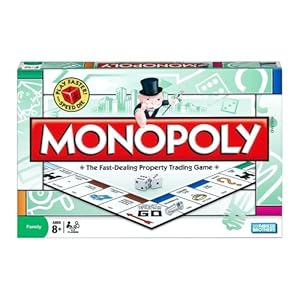
 I Have chosen to go for 'Monopoly' as my example. This game combines two of the 'types of game', it combines Agon and Alea. Where the roll of the dice is key for movement which is creating the randomness of Alea. The object of the game is to be the only one with money left, so competition is thriving whilst you are trying to destroy you opponents and make the bankrupt. This competition is demonstrating Agon.


Pictures:

Friday, 7 October 2011

I have no words, I must design

Another article we were asked to read was called 'I have no words, I must design' written by Greg Costikyan.
Where he claims 'A game is an interactive structure of endogenous meaning that requires players to struggle towards goals'.

From reading this, i managed to pull out key elements he believed essential for games. These are the parts I managed to pull out that are of more significance:

Interaction
  • A choice with an outcome or purpose
  • Achieving an outcome
  • The player has to have some control over a game state
  • Personal interpretation
  • Choices make the game unique
Goals
  • Interaction isn't enough
  • Must have objectives
  • Giving a reason to achieve goals
  • You can create your own goals
Struggle
  • Something to overcome
  • A way to improve
  • Adding competition to games
Structure
  • Shapes the game
  • Creates a sense of player behaviour
  • No longer random
  • Adding rules
Endogenous Meaning
  • Things that are meaningful within the game e.g. monopoly money is worthless in the real world, however it is the most valuable object withing the game.
These notes may no mean alot to readers who havent read the article, but for all those who have, these elements can be considered incredibly important.

In the Beginning, There is the Games Designer

As part of the course I was asked to read a section of a book called 'The Art of Games Design: A book of lenses' (2009) written by Jesse Schell.
As I have read this book before and thoroughly enjoyed it, I had no problem with being asked to read this again.
Whilst reading it, I made notes on what Jesse Schell is trying to say within the book. These notes give me an idea of things I need to do to be a Games Designer.

Notes:
  • I really don't need to be embarrassed of an idea, no matter how rubbish it is.
  • Always have the belief my idea is good until proven otherwise.
  • Never think of boundaries before coming up with an idea.
  • Lack fear of ridicule.
  • Decisions must be made with confidence.
  • Failure is beneficial due to learning curves.
  • It is good to have a wide variety of skills.
  • Skills; Animation, anthropology, architecture, brainstorming, business, cinematography, communication, creative writing, economics, engineering, history, management, mathematics, music, psychology, public speaking, sound design, technical writing, visual arts.
  • Listening is the most important skill.
    • Listen to your team
    • Listen to your audience
    • Listen to your game
    • Listen to your client
    • Listen to yourself
  • If you have the major gift, the love for games design, you will design games using whatever limited skills you have. you will keep doing it. Your love for the work will shine through.
  • Practice is also very important.
Overall it has been a great inspiration for me, who from before the course may sometimes doubt my own ability to complete the tasks at an acceptable level. This makes me believe in my own abilities to a whole new level. Knowing that to be a Games Designer i just need to believe I am one.

Most of all I've learnt to LOVE MY WORK.